The Ethos Journal
Insights from the field, stories, tools, and transformations emerging from our global gatherings, spiritual journeys, and consulting practice.

Insights from the field, stories, tools, and transformations emerging from our global gatherings, spiritual journeys, and consulting practice.
 Ethical Leadership
For many institutions, ethics is still treated as something applied after the fact. It appears in policy statements, safeguarding frameworks, compliance reviews, or public responses once harm has already emerged. But this is no longer sufficient, especially in environments that shape the lives of young people. Where youth are concerned, design is never neutral. Every institution that forms, guides, educates, trains, evaluates, or influences younger generations is already shaping habits of attention, patterns of response, standards of self-worth, and conditions of judgment. Schools, universities, foundations, youth programmes, digital platforms, sports organisations, academies, cultural institutions, and media environments do more than deliver services or opportunities. They participate, often quietly, in the formation of the person. This is why ethics can no longer remain external to design. Recent debates on adolescent mental health and social media have made this especially visible. Increasingly, the issue is not only content, but structure: the architecture of platforms, the incentives they reward, the forms of dependency they normalize, and the vulnerabilities they intensify. Yet the lesson extends far beyond digital media alone. The same question must be asked of every institutional environment that shapes youth through ambition, performance, competition, recognition, belonging, and pressure.
What kinds of behaviour are our systems rewarding?
What forms of pressure are we normalizing?
What vulnerabilities are we overlooking because they are operationally convenient?
What do young people learn about value, success, identity, and responsibility from the environments we build around them?
And what are we scaling before we have fully examined the human consequences?
These questions matter in education. They matter in youth leadership. They matter in foundations and civil society. They matter profoundly in sport. Because sport does not only develop talent. It also forms perception, conduct, emotional thresholds, and moral reflexes. It shapes how young people understand discipline, recognition, failure, loyalty, responsibility, pressure, and success. When the environment is well-formed, sport can become a school of character, proportion, and respect. When it is poorly designed, it can normalize instrumentalization, silent pressure, precocious exposure, and distorted standards of worth. I have developed last year the Ethos framework and I feel more and more that Ethics by Design becomes necessary.
Ethics by Design means that responsibility is not added later as a corrective layer. It is built into the conception of programmes, pathways, technologies, communications, evaluation systems, leadership cultures, and institutional processes from the beginning. It asks not only whether something performs efficiently, but what it forms. Not only whether it succeeds operationally, but whether it remains accountable to human consequence. For institutions working with youth, this is no longer optional. The younger the population, the greater the responsibility to examine design before harm becomes normalized.
The real question is not whether institutions say they care about young people.
The real question is whether that care is serious enough to shape what they build.
 Retreat Stories
Today I came across a very interesting article* on the way our brain works. It stayed with me, not only because of what it said about attention, concentration, and mental performance, but because of what such discussions often leave unspoken.
Much of today’s conversation focuses on concentration, speed, stamina, and cognitive sharpness. We ask whether we are losing the ability to focus, whether constant stimulation is weakening memory, whether digital environments are reshaping the way the mind operates. These are important questions, and they deserve serious attention. But increasingly, it seems to me that what is at risk is not only attention itself. What also appears to be weakening is the inner steadiness required for sound judgment. That distinction matters.
A person may remain informed, active, highly responsive, and mentally agile, yet still struggle to judge well. One may process information quickly and still fail to read a situation truthfully. One may remain intellectually capable and still fail to act with proportion, restraint, and seriousness. This is where the deeper question begins. Not only whether we continue to think efficiently, but whether we continue to judge truthfully. Not only whether the mind remains sharp, but whether the person remains capable of responsibility and of a more serious reading of the situation.
This is where ETHOS begins.
For me, the issue is not simply cognitive decline, nor is it only the overstimulation of the modern mind. It is also the weakening of that inward condition from which responsible judgment becomes possible. The problem is not just that our thoughts are interrupted more often. It is that our relationship to reality itself can become thinner, more rushed, more fragmented. We begin to react faster, but not necessarily see better. We become quicker, but not necessarily clearer. We remain active, but not always rightly oriented. And this has consequences far beyond personal wellbeing.
In institutions, leadership environments, educational settings, and decision-making structures, the question is not merely whether people are mentally fit enough to perform. The question is whether they remain inwardly grounded enough to discern what a situation truly requires. Whether they can distinguish urgency from importance. Whether they can resist the pressure of immediacy. Whether they can recognize human consequence beneath operational demand. Whether they can act without becoming captive to speed, noise, or surface reaction.
This is why orientation before action matters. It is a central principle for me, and one that runs throughout the ETHOS framework.
Before deciding, before reacting, before influencing others, before shaping consequences that may extend far beyond the moment, something deeper is needed than performance alone. Action without orientation becomes impulsive, distorted, or merely efficient in the wrong direction. A sharp mind without inner steadiness can still produce poor judgment. Technical intelligence without ethical attention can still lead to serious human failure.
Mental fitness matters. Of course it does. We need concentration. We need disciplined attention. We need the capacity to remain mentally present. But beyond cognitive sharpness lies another capacity that is at least as important: the capacity to remain inwardly steady and act with responsible judgment.
That kind of steadiness is not passive. It is not slowness for its own sake. It is not withdrawal from the modern world, nor is it an anti-technology stance. It is something more demanding. It is the ability to hold one’s ground inwardly long enough for truth and responsibility to re-enter the scene before action takes over. It is the refusal to let speed become sovereignty. It is the insistence that clarity is not measured only by processing power, but by the quality of one’s relation to reality, consequence, and the human other.
This is one of the reasons I believe the conversation around mental fitness needs to deepen. We should certainly care about how the brain works. But that is no longer the only question. The deeper question is what kind of person is being formed under these conditions and whether that person remains capable of judgment worthy of trust.
This is not merely a private concern. It is an institutional one. It concerns leadership, governance, education, and every environment in which human beings carry responsibility for others.
This is a conversation worth having in institutions where judgment carries consequence.
*Source: The New York Times
https://www.nytimes.com/2026/03/27/opinion/technology-mental-fitness-cognitive.html?unlocked_article_code=1
 Interfaith reflections
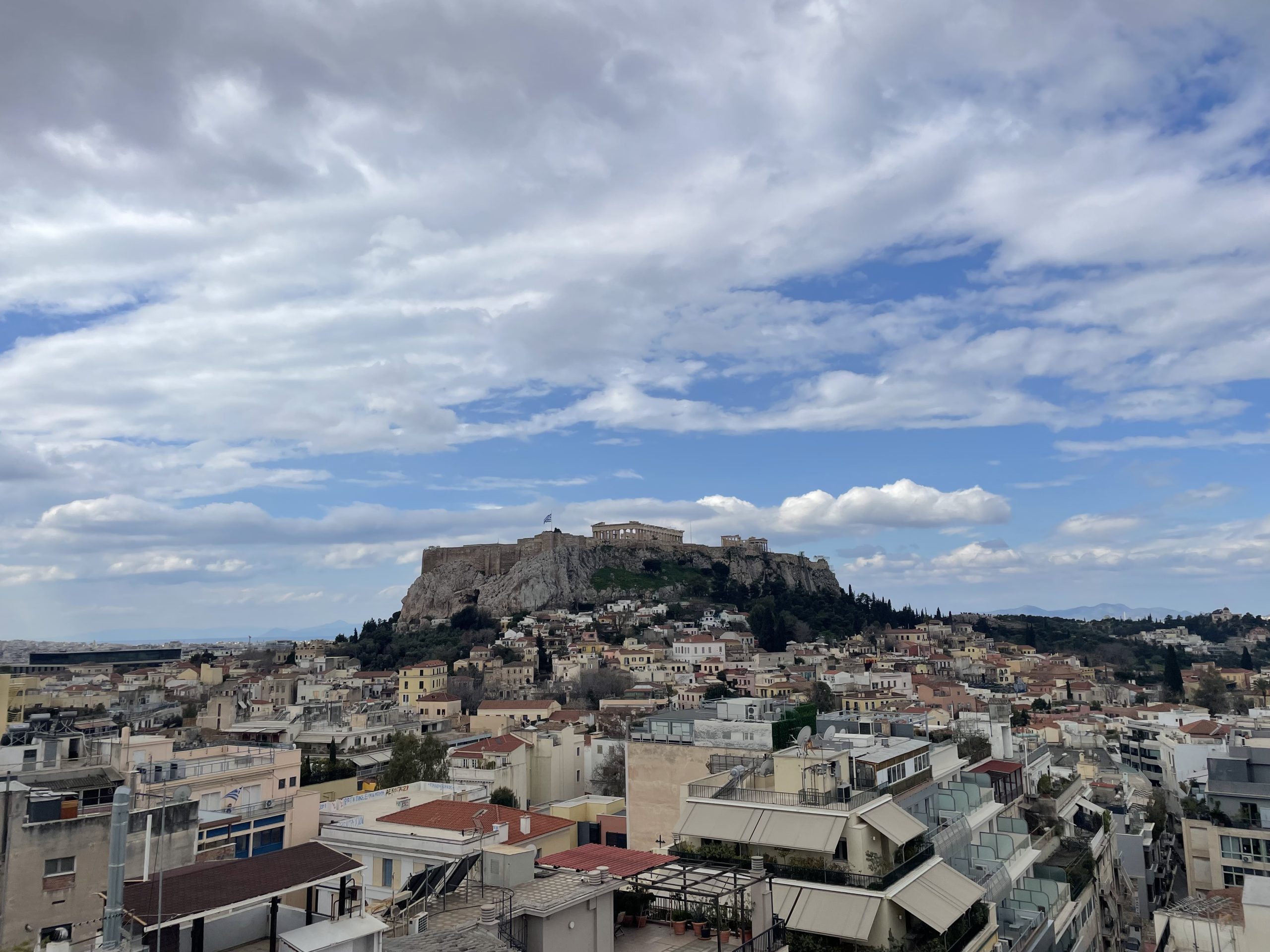
At a recent workshop in Athens on “Orthodoxy, War, and Human Rights”, organized by the International Orthodox Theological Association colloquium and co-hosted by the Francis Rich School of Arts, Humanities & Social Sciences of The American College of Greece (20–21 March 2026), I reflected on a demanding question:
What is the responsibility of Orthodoxy in times of war? My response was simple, yet not easy. I prefer speaking about peace rather than war. Yet peace today cannot be addressed without confronting what war does to the human person.
War is not only a geopolitical event.
It is an ontological rupture.
It fractures relationships. It distorts perception. And perhaps most dangerously, it normalises the dehumanisation of the other. When theology reinforces division rather than protects the human person, it ceases to be prophetic. It becomes functional.
From my perspective, the starting point is not the state, nor the conflict. It is the human person, created in the image and likeness of God, bearing an inherent and non-negotiable dignity. This is where an important convergence exists with the international human rights framework. Yet Orthodoxy contributes something further: it understands dignity not only as a legal principle,
but as a relational and spiritual reality. This depth matters.
In this context, interreligious engagement is not optional. It is an ethical necessity. It affirms that suffering is not confined within religious or national boundaries. It resists fragmentation. And it preserves the presence of the other as a human person. This leads to a final point.
Orthodoxy cannot remain at the level of right belief alone.
It must move toward responsible action:
• to name violence clearly
• to accompany without instrumentalising
• to refuse dehumanising narratives
Orthodoxy cannot stop wars.
But it can preserve something essential:
the capacity to see the other as human.
And today, this may be its most important contribution.
 Art stories
When Art Becomes Witness
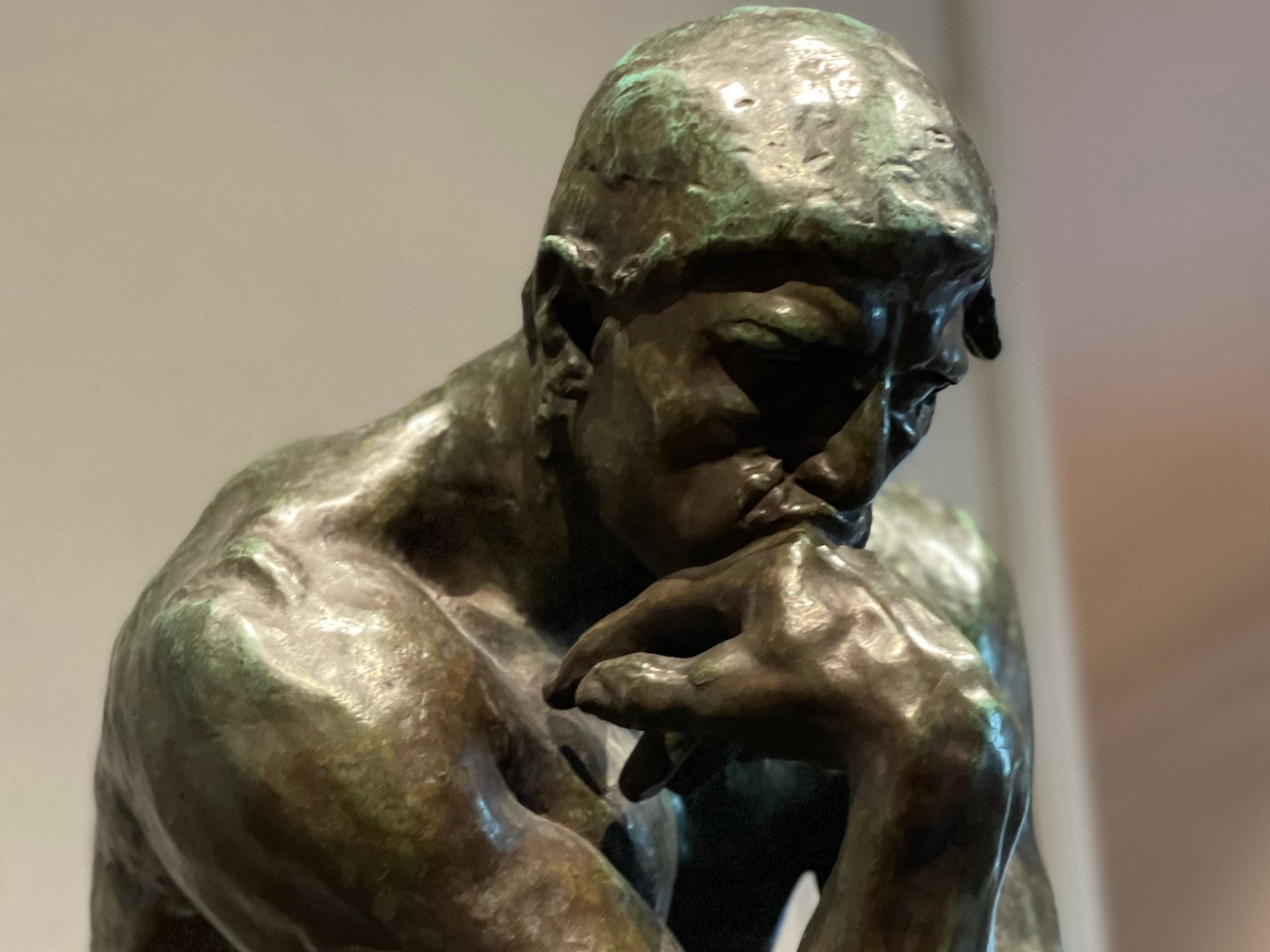
Attending “Thinking ‘Art’ to Heal Wounds” today at Maison de la Paix in Geneva reminded me that, in times of conflict, art does more than express. It becomes witness. The discussion brought back to mind a photograph I took during a museum visit in Washington, DC, of Rodin’s Thinker, a work that, for me nowadays, perhaps more than ever, captures the gravity of human reflection before and after suffering. In this sense, art gives form to the inward labour of conscience, memory, trauma, and healing.
Art cannot replace diplomacy, justice, or humanitarian action. But it can reach dimensions of human experience that formal mechanisms often fail to touch. It can preserve memory against forgetfulness. It can protect suffering from being reduced to abstraction. And it can give visible form to what must not disappear.
I was also reminded how closely this connects to my own work on Spiritual Intelligence. Not as withdrawal from reality, but as the human capacity to remain oriented toward meaning, truth, and responsibility amid fragmentation, pain, and uncertainty. Art can nourish that capacity. It can restore inner measure, moral attention, and a deeper awareness of what is at stake when public life becomes reactive and exhausted.
Another important strength of art is its ability to create encounter across difference. Artists from different cultural, religious, and spiritual backgrounds can often collaborate with surprising immediacy. Art can gather people of diverse beliefs without requiring sameness. It opens a space in which dignity, beauty, suffering, and hope can still be shared.
In a world marked by conflict and polarisation, this is not secondary. It is part of the deeper human work of peace.
 Ethical Leadership
The Touch of Faith: Thomas Between Doubt and Relationship
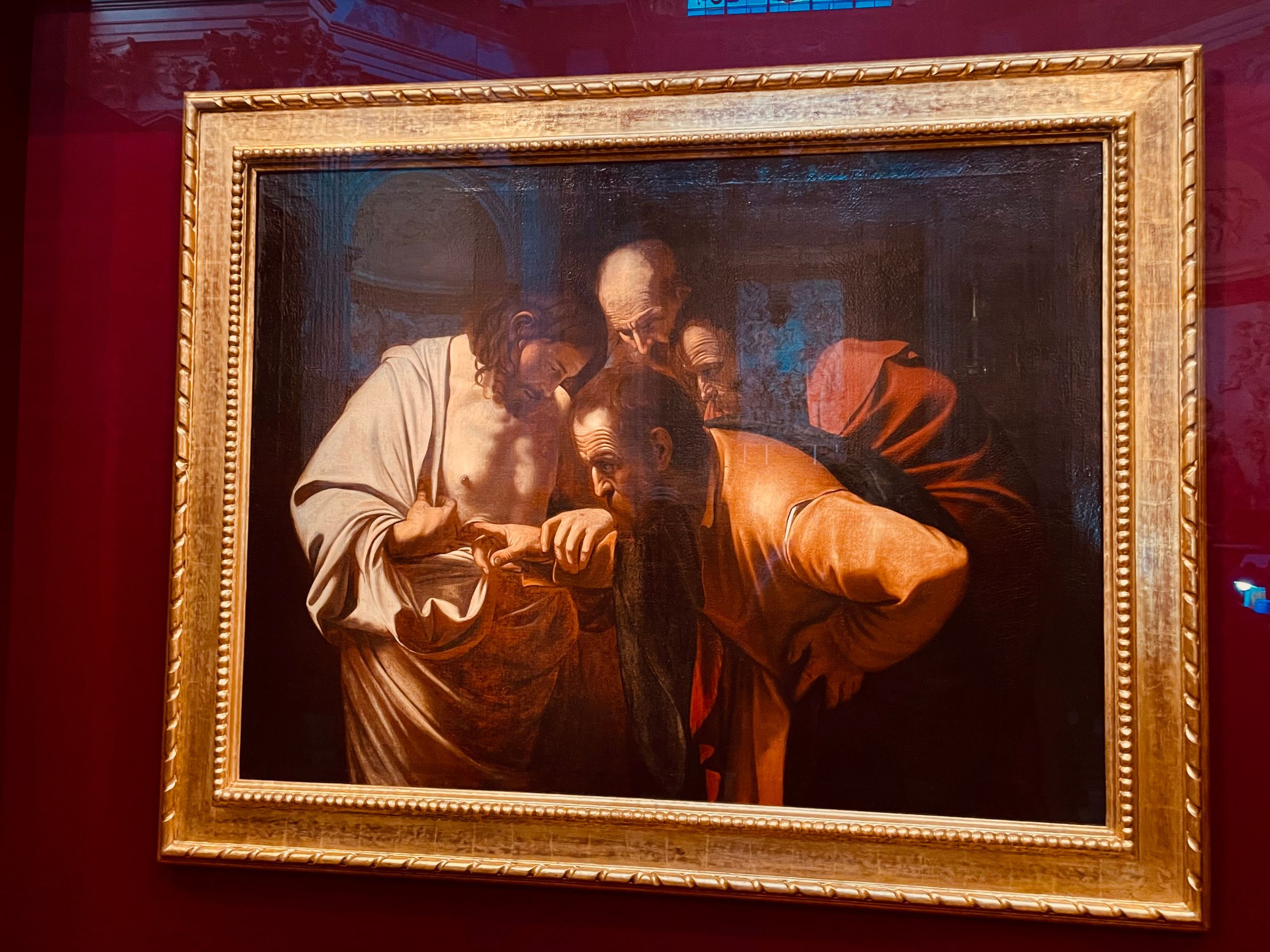
I found myself in Rome this week while participating in an important program focused on the protection and security of places of worship. With one hour between meetings, I wandered into one of my favorite squares, where a small church stood, one I had never entered before. Inside, I encountered Caravaggio’s Incredulità di San Tommaso. I remained before it for a long time. Not only because of its artistic intensity, but because it revealed something deeper: a reminder of the nature of human searching.
In Caravaggio’s painting, the Resurrection is not presented as a triumphant display, but as a moment of quiet encounter. Christ does not impose Himself. He offers Himself. He does not demand belief; He allows Himself to be touched. Thomas does not appear as a symbol of unbelief, but as an emblematic figure of authentic seeking. His doubt is not rejection; it is the desire for authenticity. He does not settle for second-hand testimony. He seeks experience. He seeks relationship. He seeks to encounter truth not as an idea, but as a presence.
Caravaggio dares to portray this moment with almost physical rawness. Thomas’s finger enters Christ’s wound. Faith is born through vulnerability. The divine is revealed not through untouchable perfection, but through a wound that remains open. This scene discloses a profound theological truth: faith is not the absence of questions, but the transformation of questions within relationship. Christ does not reject Thomas’s need to touch. He sanctifies it. Doubt becomes a place of encounter. At the same time, the composition reminds us that faith is not an isolated act. The other disciples lean in with Thomas. The community participates in the search. Faith emerges within relationship and shared presence, not within isolated certainty.
In a world that often fears doubt or treats it as a threat, Caravaggio reminds us that authentic spirituality does not demand uncritical acceptance. It calls for sincere seeking. Faith that has not touched the wound of the world risks remaining superficial. Thomas, in the end, is not the unbelieving disciple. He is the disciple who dared to seek the Risen One through the most human need: to touch in order to believe, and to believe in order to love.
Perhaps, ultimately, faith does not begin with certainty.
Perhaps it begins with the willingness to remain present before the wound, until encounter becomes possible.
Rome, 2026
*This reflection forms part of the wider intellectual and experiential foundation of Ethos Retreat.
 Ethical Leadership
Multilateralism as an Ethical Imperative. Shared responsibility in a fragmented world
Multilateralism is not only a diplomatic tool. From an ethical perspective, it is a moral stance. In an interconnected world, decisions rarely affect only one actor. They shape communities, economies, institutions, and futures far beyond borders. Ethical multilateralism means:
acknowledging interdependence,
resisting unilateral power,
choosing dialogue over domination,
sharing responsibility for outcomes.
At a time of converging global crises, ethical leadership is measured not by how quickly decisions are imposed, but by how responsibly they are shared. At Ethos Global Consulting, we approach ethics as a practice that begins where isolated authority ends and where responsibility becomes collective.
We decide together because our consequences are shared.
By Dr. Nikolaos F. Dimitriadis, Ethos Global Consulting (EGC)
 Letters from the Journey
Letters from the Journey. What remains after the encounter
There are moments in teaching, leadership, and shared work that pass quietly. A conversation after class. A walk. A song played at the right time. A silence that allows something true to emerge.
Years later, a letter arrives:
“You taught me true happiness and a genuine appreciation of life in just a few months. These are things I will practice for the rest of my life.”
These letters were not written as testimonials. They were written as gestures of gratitude, recognition, and remembrance. They speak not of achievement, but of encounter.
Over the years, students and companions on the journey have entrusted me with words that reflect what remained after our paths crossed. I do not share them as endorsements, but as witnesses to something deeper: that learning, at its best, is relational; that leadership is ethical before it is strategic; that education is a shared act of becoming.
Each letter is offered with deep respect for anonymity. They belong first to those who wrote them. I receive them as a responsibility, and a reminder to remain attentive, humble, and faithful to the path.
“Letters from the Journey” is an invitation to pause. To listen. To remember that what we give to one another often exceeds what we can measure. If something in these pages resonates, may it encourage the same attentiveness in your own encounters with students, colleagues, communities, and the world.
“What remains is not the lesson. What remains is the relationship”.
Professor N.
 Ethical Leadership
⚽ Spiritual Intelligence and Football: The Beautiful Game, Reimagined
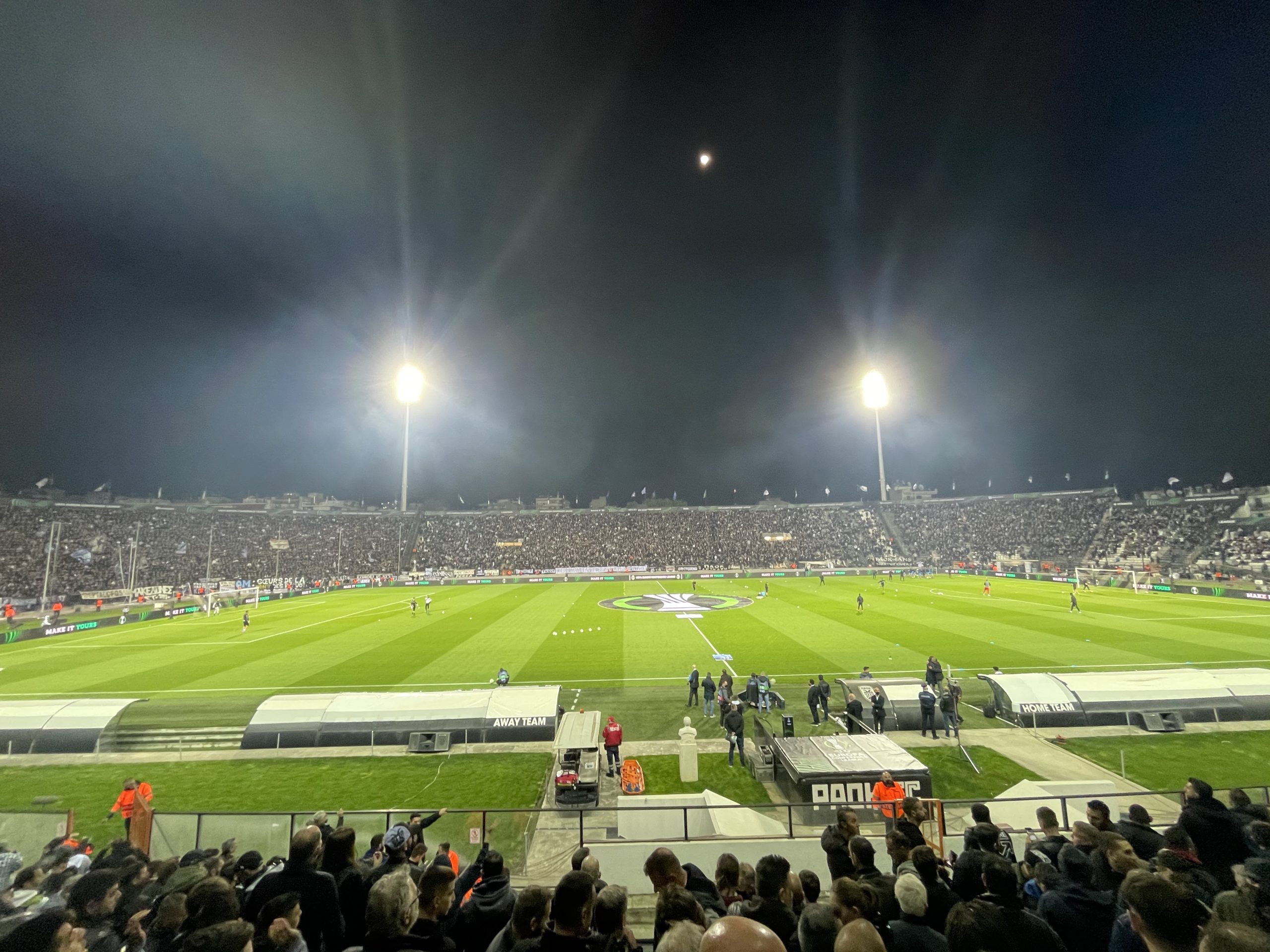
There’s a moment, just before kick-off, when the stadium lights hit the pitch and the air feels charged with something more than electricity. It’s belonging. It’s tension. It’s joy. I’ve felt it countless times in small local grounds and in packed arenas where thousands sing the same song in dozens of different accents. Every time I’m there, I remember why I love football: because it reminds me that life, at its core, is not about perfection but about presence. It’s about how we move together, even in disagreement, for something larger than ourselves.
Football, at its deepest level, is not merely a contest of skill, strength, or strategy. It is a mirror of the human spirit, a universal language through which entire communities express hope, resilience, and belonging. When thousands sing together in a stadium or when children in a remote village kick a ball made from cloth, something transcendent happens: we touch the sacred dimension of play itself. This is where spiritual intelligence, the capacity to live with purpose, empathy, and ethical awareness, meets the world’s most popular sport.
Ancient Greek philosophers saw athletics as paideia, a path toward virtue and harmony between body and soul. Modern football can rediscover this wisdom. The sport, when guided by ethics and consciousness, becomes more than a global industry; it becomes an educational ecosystem, one that can teach fairness, humility, teamwork, and RESPECT.
A Game of Responsibility
Football, like life, thrives on energy, emotional, physical, even environmental. When I watch teams and fans now, I think about how each celebration, each journey to the stadium, each goal lit by floodlights, connects us to the wider world. The pitch is green, but so is the planet that sustains it.
To love football deeply is to care about the ground it stands on, the people who clean the stands, the kids who dream with a ball under their arm, the air we all breathe when we sing. That’s what sustainability means to me, not policy, but gratitude. Not a corporate slogan, but a form of respect.
The future of football will not be measured solely by trophies but by the legacies it leaves behind: cleaner energy, empowered communities, more inclusive stadiums, and young fans who grow into conscious citizens. In this sense, sustainability is football’s metanoia, its conversion from performance to purpose. The sport’s enormous visibility gives it both privilege and responsibility: to model the ethics of balance, cooperation, and gratitude in an age defined by competition and consumption.
The Beautiful Game, Reimagined
So when I speak of spiritual intelligence, I’m really speaking about this:
That somewhere between the chants, the tackles, and the whistle, football is teaching us how to be more human. That’s why I believe the future of the game and of our world depends on how much wisdom we’re willing to bring to our play. When football serves both people and planet, it fulfills its highest calling: to be a movement of meaning.
“Because when football teaches us how to care, it wins every match that truly matters.”
 Ethical Leadership
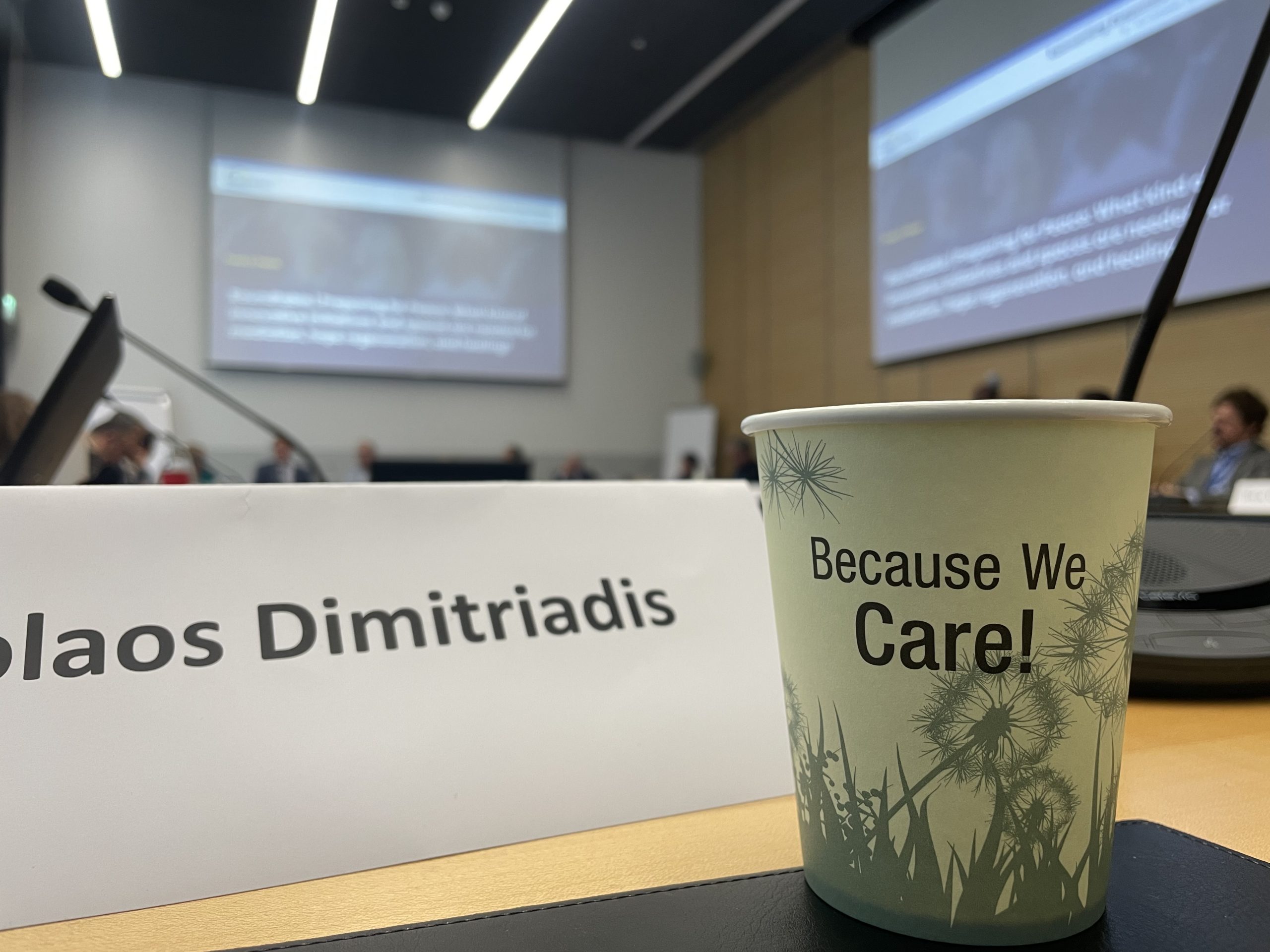
The Global Ethics Forum 2025 (GEF2025) is convening at a pivotal time, guided by the theme: Reinventing Responsible Governance: Navigating Dilemmas, Power, and Purpose.
First and foremost, I would like to congratulate Globethics for this inspiring initiative and for their excellent work in advancing ethical reflection and cooperation at a time when our world needs it most. I had the privilege to participate in a trully moving Roundtable titled “Preparing for Peace: What kind of innovative initiatives and spaces are needed for mediation, hope regeneration, and healing?”
It is deeply meaningful that our discussion today coincides with renewed efforts toward ceasefire and reconciliation in Gaza. Yet mediation, in its truest sense, must not be reduced to a negotiation table. It is, rather, a form of spiritual diplomacy, a pilgrimage from truth to transformation.
Such a journey calls us to unite moral accountability with prayerful encounter and concrete restorative action. It reminds us that peace is not merely achieved, but cultivated, through metanoia, dialogue, and shared humanity.
At the heart of this pilgrimage lies Spiritual Intelligence (SI), the capacity to see the sacred in the other, to discern meaning in suffering, and to act from compassion rather than control. If peacebuilding is to endure, it must be rooted in this intelligence: one that integrates the ethical, emotional, and spiritual dimensions of human life into a coherent force for healing and hope.
Let us therefore join our minds and hearts, especially tonight, across traditions, nations, and narratives, to co-create spaces where peace is not only negotiated, but nurtured.
Together, let us embody the transformation we seek, for a world reconciled in dignity and truth. Because We Care!
Geneva, Global Ethics Forum October 2025
Dr. Nikolaos F. Dimitriadis
President, CEMES | Founder & CEO, Ethos Global Consulting
 Ethical Leadership
At Ethos Global Consulting, we call this dimension Spiritual Intelligence (SI), which is the capacity to find meaning, to build trust, to live and lead with purpose beyond success or profit. To see it lived out in my teacher’s life, and to be able to honor him in this way, is a powerful reminder that SI is not theory: it is practice, example, and legacy.
Your Eminence, distinguished colleagues, dear friends,
Before I begin, I kindly ask you to join me in a brief moment of silence and prayer in loving memory of Professor Chrysostomos Stamoulis, who is now in the hands of our God. Εις μνήμην Χρυσοστόμου Σταμούλη.
On behalf of the Center of Ecumenical, Missiological, and Environmental Studies (CEMES), it is my joy to welcome you to Thessaloniki for the 16th International Conference of the Ecclesiological Investigations Research Network.
I wish to express our heartfelt gratitude to the Holy Metropolis of Thessaloniki and His Eminence Metropolitan Filotheos, Honorary President of CEMES, for his blessing and support; to the Center of Saint Gregory Palamas for their collaboration; to the American College of Thessaloniki and its President, Dr. Panos Vlachos, for their partnership; to Father Alexandros Karloutsos for his efforts towards the universal love, and to the organizing committee, especially to Dr Elizabeth Profromou that she wanted to be here with us, but she is following it from the live streaming and all who worked tirelessly to make this event possible.
CEMES was founded to foster reflection at the crossroads of ecumenical dialogue, missiological responsibility, and environmental concern. For us, theology is never abstract.It is lived in communities, challenged by dissent, shaped by power, and called to bear witness to the Gospel in a changing world. This is why we are proud to co-host a conference that addresses precisely these themes: “Dissent, Power, and Christian Identity.”
We remain inspired by the vision of His All-Holiness Ecumenical Patriarch Bartholomew, who blessed our Center from the very first day and reminded us that the future of the Church depends on unity, solidarity, and dialogue. His words continue to guide our mission and our hope for gatherings such as this.
Thessaloniki, our host city, is itself a symbol of dialogue and encounter—from the Apostle Paul to the Byzantine theologians, from interreligious exchange to modern ecumenical movements. It stands as a living reminder that Christian identity is always forged in conversation with others.
This gathering, therefore, is not simply an academic exercise, but an opportunity:
– to listen to diverse voices,
– to explore how ecclesiology can speak to today’s crises of division and injustice,
– and to nurture bonds of friendship and collaboration that will last beyond these days, especially as this year we celebrate the 1700 anniversary after Nicaea.
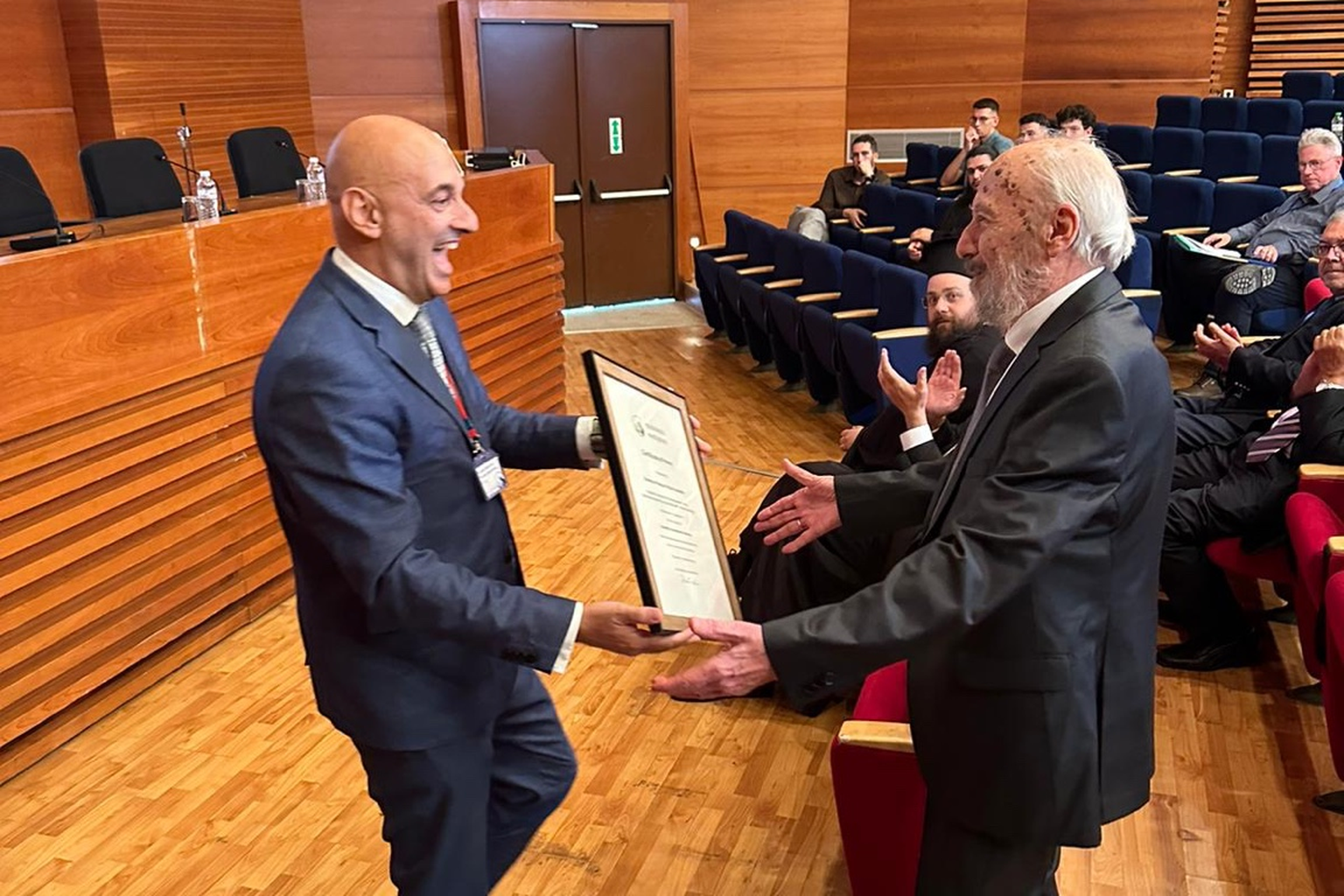
At this moment, it is also my great joy and deep emotion to honor a man whose life embodies this spirit of dialogue and vision: Professor Petros Vassiliadis.
As one of his students, I carry not only the memory of his lectures on the New Testament, missiology, and interfaith dialogue, but above all the spirit he imparted. A spirit of openness, ecumenical vision, courage to dissent, and unwavering commitment to unity and understanding.
Professor Vassiliadis has been much more than an academic. Through his leadership in the ecumenical world, his pioneering work on mission, dialogue, and ecology, and his dedication to generations of students, he has shaped the way theology is lived and practiced in our time. His prophetic voice continues to inspire scholars and believers across the world.
For me, and for many of us here, his greatest legacy is the example of a teacher who never stopped learning, never stopped challenging us to see beyond ourselves, and never stopped believing in the transformative power of faith.
Professor, it is a great honor to hand you this Certificate of Honor, in grateful recognition of your distinguished service, your inspirational leadership, and your seminal contributions to theology.
May this moment be a small token of the immense gratitude and respect we all feel for you, as teacher, mentor, colleague, and friend.
🎥 You can watch this part of the tribute here (from 27:10):
 Ethical Leadership
The Three Intelligences We Need
For decades, we have celebrated two forms of intelligence: AI (Artificial Intelligence), our ability to design machines that reason, calculate, and solve complex problems. EI (Emotional Intelligence), our ability to understand, manage, and empathize with people. These have shaped our schools, corporations, and politics. But are they enough?
AI can tell us how to do things efficiently.
EI can help us keep people engaged along the way.
But SI (Spiritual Intelligence) is what enables us to perceive rightly whether we are doing the right things at all.
Without SI, our systems are like devices without SIM cards: sleek, powerful, but ultimately unable to connect to what matters.
Spiritual intelligence is not about mystical escape, but about clarity of heart. It is the inner compass that helps us distinguish between what only appears good and what truly is good. Just as a craftsman tests whether a tool is sharp not by admiring its shine but by seeing if it cuts rightly, so too SI allows us to test whether our decisions bring life, healing, and integrity or whether they simply disguise harm under efficiency or popularity.
It is the wisdom that asks not only “Can we?” but “Should we?”, not only “Does it work?” but “Does it serve what is just and true?”
 Ethical Leadership
A Note on AI
In EGC we do not condemn Artificial Intelligence.
AI is powerful. It can process vast data, optimize systems, and accelerate discovery.
But power without purpose becomes dangerous. That is why Spiritual Intelligence (SI) must serve as the compass. Spiritual Intelligence gives AI direction. It ensures that technology and analysis serve dignity, not domination; connection, not control.
EGC does not reject AI. We redeem it. We place it in service of higher ends: wisdom, justice, community, and hope.
 Ethical Leadership
Why Spiritual Intelligence (SI) must become the compass for leadership and life
In a world rich in data and skills but often poor in wisdom, one dimension remains overlooked. Through teaching, I discovered that sometimes the best way to explain a concept is by beginning with what it is not. Spiritual Intelligence (SI) is not religion. It is the human capacity to:
–Find meaning in life and work
–Live with purpose beyond success or profit
–Build trust and foster inclusion
–Choose wisely for the greater good
Without Spiritual Intelligence (SI), leaders chase speed, scale, and comfort, while societies fracture. With SI, they build resilience, dignity, and purpose: foundations that endure. SI is a neglected resource that in leadership gives connection, direction, and purpose to all the functions that AI and EI alone cannot fulfill.
A False Sense of Progress
The moment it all started was not in a classroom or a retreat, but in two encounters that revealed the same truth. I once witnessed investors spend an entire session calculating whether a new pricing model would raise quarterly margins by half a percent, without once asking if the product improved anyone’s life. Some years ago, in Nairobi, a young teacher asked me: “How do I keep my students learning when the school has no electricity?” That was the moment it struck me: We are not suffering from a lack of intelligence. We are suffering from a lack of direction. The contrast between the boardroom investors and the Nairobi teacher illustrates two worlds: one obsessed with marginal profit, the other facing real human need. Spiritual Intelligence becomes the missing compass that bridges them.
The Five Principles of SI
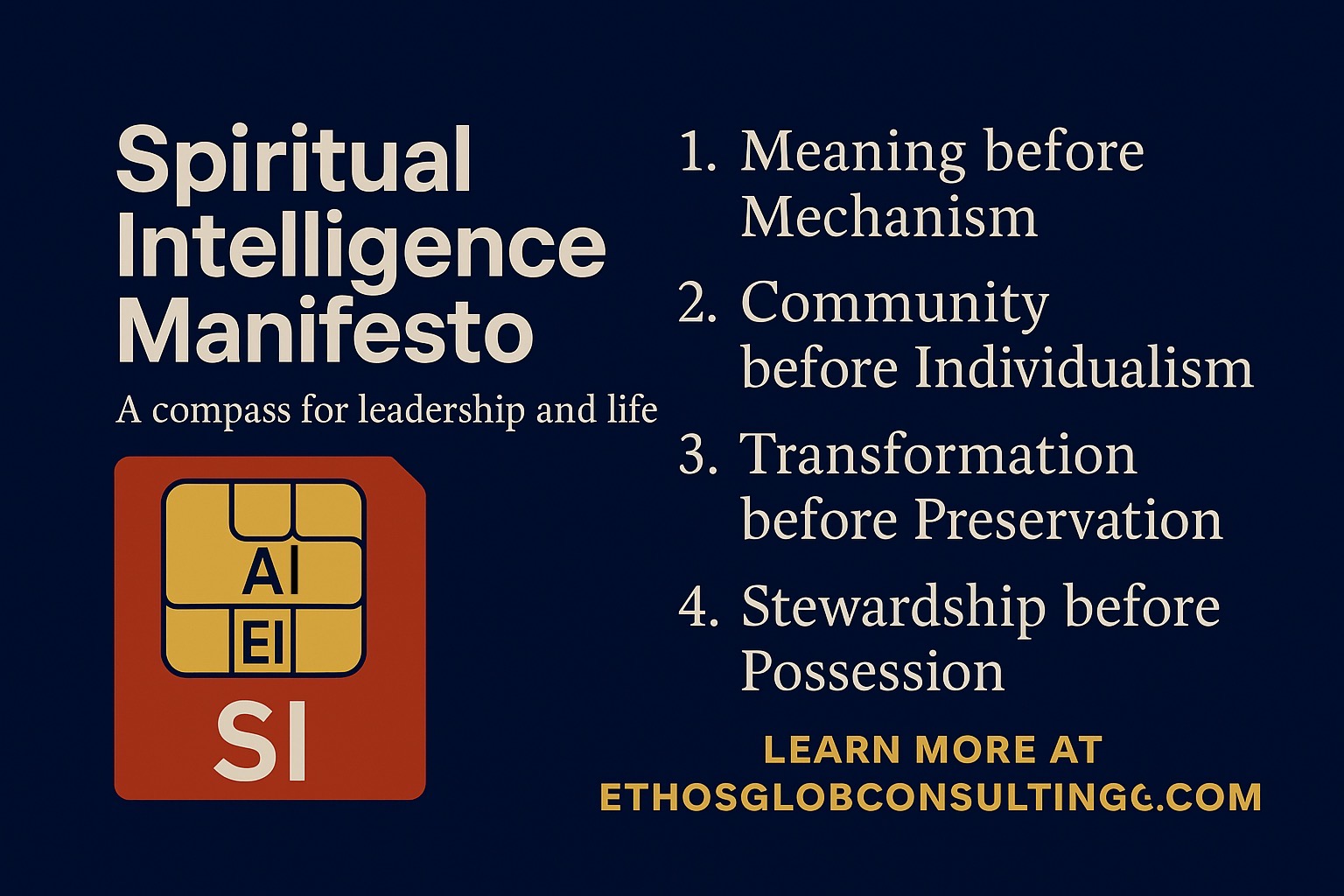
1.Meaning before Mechanism
Not everything can be measured, priced, or controlled. Spiritual intelligence resists the reduction of life to economics or utility, and points to the mystery that transcends calculation: the dimension where meaning, freedom, and eternity dwell.
■ Efficiency without meaning is empty.
2.Community before Individualism
Life is not self-sufficiency but shared existence. True intelligence does not isolate or overpower. Leadership must strengthen communion, across peoples, faiths, and cultures — not amplify isolation. Every decision should heal fractures and build trust.
■ Leadership is the art of building trust.
3.Transformation before Preservation
Spirituality is not nostalgia — it is the courage to be renewed. It is the courage to repent, to change direction, to imagine new forms of life that witness to justice, peace, and hope. In an age drowning in information, spiritual intelligence discerns what is useful from what is holy, and what is urgent from what is eternal.
■ Renewal is the deepest tradition.
4.Stewardship before Possession
The earth is not property, but gift. Spiritual intelligence demands that we cultivate creation with reverence, turning away from exploitation toward responsibility, gratitude, and care. Every innovation, policy, or enterprise must ask: does this sustain creation, or does it wound it?
■ We do not own the earth. We owe it.
5.Hope before Fear
Fear builds walls, but hope builds bridges. Leadership begins when we see the face of the other not as means, but as mystery. Leaders animated by spiritual intelligence dare to imagine futures of reconciliation, justice, and ecological renewal — and act to make them real.
■ Hope is the courage to build bridges.
■ Ethos Global Consulting (EGC) — Leading with Spiritual Intelligence
■ www.ethosglobconsulting.com